Saturday, October 31, 2015

Big Day

Today in History

October 31

1517: Martin Luther nails his 95 Theses to the door of the church at Wittenberg in Germany. Luther’s theories and writings inaugurate Protestantism, shattering the external structure of the medieval church and at the same time reviving the religious consciousness of Europe.

1803: Congress ratifies the purchase of the entire Louisiana area in North America, adding territory to the U.S. which will eventually become 13 more states.

1838: A mob of about 200 attacks a Mormon camp in Missouri, killing 20 men, women and children.

1864: Nevada becomes the 36th state.

1941: After 14 years of work, the Mount Rushmore National Memorial is completed.

1952: The United States explodes the first hydrogen bomb at Eniwetok Atoll in the Pacific.

1968: The bombing of North Vietnam is halted by the United States.

1971: Saigon begins the release of 1,938 Hanoi POW’s.

1984: Indian Prime Minister Indira Gandhi is assassinated in New Delhi by two Sikh members of her bodyguard.

1998: Iraq announces it will no longer cooperate with United Nations weapons inspectors.

1999: EgyptAir Flight 990 crashes into Atlantic Ocean killing all 217 people on board.

2000: Soyuz TM-31 launches, carrying the first resident crew to the International Space Station.

2002: Former Enron Corp. CEO Andrew Fastow convicted on 78 counts of conspiracy, money laundering, obstruction of justice and wire fraud; the Enron collapse cost investors millions and led to new oversight legislation.

Born on October 31

1795: John Keats, poet.

1802: Benoit Fourneyron, inventor of the water turbine.

1860: Juliette Low, founder of the Girl Scouts.

1887: Chiang Kai-Shek, Chinese Nationalist.

1896: Ethel Waters, actress and blues singer.

1902: Carlos Drummond de Andrade, Brazilian poet, journalist and short story writer.

1917: William H. McNeil, historian (The Rise of the West).

1925: Charles Moore, influential post-modern architect.

1930: Michael Collins, U.S. astronaut.

1931: Dan Rather, journalist; anchor of CBS Evening News (1981–2005).

1936: Michael Landon, actor (Bonanza, Little House on the Prairie TV series).

1937: Tom Paxton, folk singer, songwriter, musician; received a Grammy Lifetime Achievement Award (2009).

1942: David Ogden Stiers, actor; best known for his role as stuffy Maj. Charles Emerson Winchester III on M*A*S*H* TV series (1977–1983).

1950: Jane Pauley, journalist; co-host of The Today Show (1976–1989) and Dateline NBC (1992–2003).

1950: Antonio Taguba, retired US Army major general best known for authoring the Taguba Report on abuse of detainees at Abu Ghraib prison in Iraq; Taguba is the second American citizen of Philippine birth to reach the rank of general in the US Army.

1961: Sir Peter Jackson, New Zealand film director, producer, screenwriter (Lord of the Rings, The Hobbit)

1961: Larry Mullen Jr., musician; drummer for U2 band.

2005: Infanta Leonor of Spain, second in line of succession to the Spanish throne.

Thursday, October 29, 2015

Today In History What Happened This Day In History

                                   Today In History

October 29

1618: Sir Walter Raleigh is executed. After the death of Queen Elizabeth, Raleigh’s enemies spread rumors that he was opposed the accession of King James.

1784: Mozart’s opera Don Giovanni opens in Prague.

1814: The Demologos, the first steam-powered warship, launched in New York City.

1901: Leon Czolgosz is electrocuted for the assassination of US President William McKinley. Czolgosz, an anarchist, shot McKinley on September 6 during a public reception at the Temple of Music in Buffalo, N.Y. Despite early hopes of recovery, McKinley died September 14, in Buffalo, NY.

1927: Russian archaeologist Peter Kozloff apparently uncovers the tomb of Genghis Khan in the Gobi Desert, a claim still in dispute.

1929: Black Tuesday–the most catastrophic day in stock market history, the herald of the Great Depression. 16 million shares were sold at declining prices. By mid-November $30 billion of the $80 billion worth of stocks listed in September will have been wiped out.

1945: The first ball-point pen goes is sold by Gimbell’s department store in New York for a price of $12.

1949: Alonzo G. Moron of the Virgin Islands becomes the first African-American president of Hampton Institute, Hampton,
Virginia.

1952: French forces launch Operation Lorraine against Viet Minh supply bases in Indochina.

1964: Thieves steal a jewel collection–including the world’s largest sapphire, the 565-carat "Star of India," and the 100-carat DeLong ruby–from the Museum of Natural History in New York. The thieves were caught and most of the jewels recovered.

1969: The U.S. Supreme Court orders immediate desegregation, superseding the previous "with all deliberate speed" ruling.

1969: First computer-to-computer link; the link is accomplished through ARPANET, forerunner of the Internet.

1972: Palestinian guerrillas kill an airport employee and hijack a plane, carrying 27 passengers, to Cuba. They force West Germany to release 3 terrorists who were involved in the Munich Massacre.

1983: More than 500,000 people protest in The Hague, The Netherlands, against cruise missiles.

1986: The last stretch of Britain’s M25 motorway opens.

1998: South Africa’s Truth and Reconciliation Commission reports condemns both sides on the Apartheid issue for committing atrocities.

1998: John Glenn, at age 77, becomes the oldest person to go into outer space. He is part of the crew of Space Shuttle Discovery, STS-95.

1998: The deadliest Atlantic hurricane on record up to that time, Hurricane Mitch, makes landfall in Honduras (in 2005 Hurricane Wilma surpassed it); nearly 11,000 people died and approximately the same number were missing.

2004: For the first time, Osama bin Laden admits direct responsibility for the Sept. 11, 2001, terrorist attacks in the US; his comments are part of a video broadcast by the Al Jazeera network.


2008: Delta and Northwest airlines merge, forming the world’s largest airline.

2012: Hurricane Sandy devastates much of the East Coast of the US; nearly 300 die directly or indirectly from the storm.

Born on October 29

1882: Jean Giraudoux, French dramatist, novelist and diplomat, famous for his book Tiger at the Gates.
1891: Fanny Brice, comedian, singer and actress.

1897: Joseph G. Göbbels, German Nazi Propaganda Minister who committed suicide in Hitler’s bunker.

1905: Henry Green, novelist (Living, Party Going).

1910: A. J. Ayer, English philosopher.

1921: Bill Maudlin, American cartoonist whose GI characters "Willie" and "Joe" appeared in Stars and Stripes newspapers during World War II.

1938: Ralph Bakshi, Palestinian-American director of live films and animated full-length films for adults including 1972’s Fritz the Cat (first animated film to be rated X by the Motion Picture Association of America), Wizards (1977) and The Lord of the Rings (1978).

1943: Don Simpson, film producer, screenwriter, actor; (co-producer Flashdance, 1985; Top Gun, 1986).

1945: Melba Moore, disco and R&B singer, actress ("You Stepped into My Life," "Lean on Me").

1946: Peter Green, guitarist, songwriter, founder of the band Fleetwood Mac; regarded as one of the greatest guitarists of all time.

1947: Richard Dreyfuss, actor (American Graffiti, Jaws; won Academy Award for Best Actor for 1977’s The Goodbye Girl).

1948: Kate Jackson, actress, director, producer (original Charlie’s Angels TV series, Scarecrow and Mrs. King TV series).

1954: Lee Child, author; creator of the Jack Reacher novel series.

1958: David Remnick, journals, author, magazine editor (The New Yorker); won Pulitzer Prize for Lenin’s Tomb: The Last Days of the Soviet Empire (1994).

1971: Winona Ryder, actress, producer (Beetlejuice; Girl, Interrupted).

Solar Technology

 New Solar Technology


Teenage inventor, Aiden Dwyer, created a new solar technology that emulates how trees convert sunlight into energy.
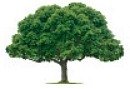
solar treeFollowing in the footsteps of inventors who use biomimicry (the science that derives models, systems or processes from nature), Aiden studied trees to perfect a solar technology that generates electricity, faster, and more efficiently than flat solar panels.


How It Works

Trees, shrubs and plants use an inherent structural design to expose their leaves to sunlight for photosynthesis.
How well they do this determines their survival, especially in forested areas that are densely populated with competing vegetation.
Aiden utilized the information on how plants are structurally designed to create his new solar technology.
This information originates from 1202, when the Italian mathematician Fibonacci published a book entitled "Liber Abaci" that introduced to Western mathematicians a numerical sequence that originated in India.
The numerical sequence is: 0, 1, 1, 2, 3, 5, 8, 13 and so on.
The first two numbers are 0 and 1, and each successive number is the sum of the previous two numbers.
Therefore, 0 + 1 is 1, 1 + 1 is 2, 1 + 2 is 3, 2 + 3 is 5, 3 + 5 is 8, 5 + 8 is 13 and so on.
fibonacci numbersThis sequence is known as the Fibonacci numbers.
In botany, phyllotaxis is the structured pattern that leaves follow to arrange themselves on a plant.
In many species of plants and trees, this arrangement coincides with the Fibonacci number sequence.
For example, in this graphic of a plant, the leaves are numbered "1" to "13".
Using a string, if we begin at leaf "1" and rotated the string clockwise around the stem to each leaf until we arrive at a leaf that was directly above "1", we would have made 3 complete rotations and would have met 5 leaves.
fibonacci numbersThe Fionnaci numbers are 3, 5 or expressed as the ratio 3/5 beginning from the bottom leaf. In other words 3 clockwise rotations for 5 leaves.
If we continue rotating our string upwards, we would make 5 rotations to meet 8 leaves to get to 13. The Fionnaci numbers are 5, 8, 13. This leaf arrangement creates the maximum exposure to sunlight.
Approximately 90 percent of plants are designed this way, however the patterns can begin at different ratios.
For example an elm tree begins at 1/2 (1 rotation for 2 branches), a beech is 1/3, an oak, cherry, or apple is 2/5, and a popular, pear or willow tree is 3/8.


New Solar Technology

Since the angle of the Sun's rays are not fixed, particularly during the changes in seasons, the use of fixed flat solar panels for homes is inefficient.
Some residential solar systems are designed to move and track the Sun but these systems substantially increase the cost of solar energy because they are expensive and require maintenance.
Using the 2/5 number pattern for the oak tree, Aiden designed a solar tree using an array of solar panels as leaves. He also made a flat solar panel with the same type and number of photovoltaic cells used in his solar tree.
This allowed him to compare the effectiveness of both solar power kits.
The solar tree design produced 20% more electricity than the flat solar panel.
It also captured 2.5 more hours of sunlight during the day, but when the Sun was on the horizon, the solar tree produced 50% more electricity and captured 50% more hours of sunlight than the flat solar panel.
Aiden's solar tree design won him the 2011 Young Naturalist Award from the American Museum of Natural History.
Aiden is currently perfecting his new solar technology by studying the Fionnaci number arrangements of various trees at different latitudes.
He has a patent pending for his invention, and we look forward to the possibility that our streets and yards will be landscaped with his new solar technology trees. 

\_(^.^)_/

Cool Invention

                                  Body Interfacing

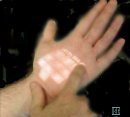
invention ideasOne of the newest invention ideas in interface devices is Skinput.
This invention allows the surfaces of your body to be used as a touchscreen.
This is how it works.
An armband projects the image of a menu or keyboard onto your hand or forearm. This armband also contains an bio-acoustic sensor that can detect and analyze sound frequencies.
Because of bone density, joints, and soft tissue, different locations on the body have different acoustic properties.
When you tap your finger on different parts of your body it creates a unique frequency based on the specific area.
Skinput can detect what part of a projected image you are touching and in turn can transmit a wireless signal to a computer, smart phone or other device.
Skinput was created by the project team of Desney Tan, a senior researcher in the Visulization and Interaction Area at Microsoft Research; Dan Morris, a researcher in the Computational User Experiences at Microsoft Research; and Chris Harrison, a third year Ph.D student in the Human-Computer Interaction Institute at Carnegie Mellon University.

Printing's New Level

                                              Three Dimensional Printing

three dimensional printing
Inventors Max Bogue and Peter Dilworth have invented a unique pen that draws in the air.
A colorful spool of plastic thread is fed into the pen.
The thread is then extruded as heated plastic that cools and solidifies instantly as it exits the tip.
This allows solid 3D structures to be drawn on any surface or from any surface into the air.
The pen, called a 3Doodler, weights approximately 7 ounces (198 g) and is 7 inches (17.7 cm) long. It requires no technical knowledge or software and plugs into an electrical outlet.
Max and Peter have received over 2.2 million dollars worth of advanced orders for their three dimensional printing pen.
They expect to fulfill those orders and launch the product in the fall of this year.
The co-inventors met while working for WowWee, a company based in Hong Kong that develops consumer technologies.
Peter consulted WowWee as an independent inventor. He had previously worked on robotics at MIT and contributed to a number of innovations including the infamous Uno Dicycle motorcycle.
Max was an R&D project manager with WowWee and has extensive experience in bringing products to market.


Wednesday, October 28, 2015

Lose Weight Now Ask Me How......

Scientific Balance Food can change human lifestyle.....

Contact number +919825 654 781
                            +917600 583 764

                 Sterilizing Spray

latest science inventions
This latest science invention is a spray-on invisible thin glass coating that sterilizes, protects and strengthens surfaces.
The coating also repels water, dirt, stains, mildew, fungus, bacteria and viruses.
A liquid coating invented at the Saarbrücken Institute for New Materials in Turkey and patented by Nanopool GmbH Germany, is a flexible and breathable spray-on glass film.
The film is approximately 100 nanometres thick (500 times thinner than a human hair) and has multiple applications and uses in numerous fields.
The coating is environmentally friendly (Winner of the Green Apple Award).
It can be applied within seconds to make any surface very easy to clean and safe from anti-microbes (Winner of the NHS Smart Solutions Award).
The special glass coating known as "SiO2 ultra-thin layering" protects practically any surface against water, UV radiation, dirt, heat, acid, stains, mildew, fungus. bacteria and viruses.
Trials by food processing plants in Germany have concluded that surfaces coated with liquid glass only need hot water for cleaning. In fact, the coating provided higher levels of sterility than surfaces cleaned with bleach or other chemicals.
A year long trial at a British hospital in Southport, Lancashire is to be published soon with very promising results for a wide range of coating applications used on medical equipment, implants, catheters, sutures and bandages.
Trials for in-vivo applications are confidential, but Neil McClelland, the UK Project Manager for Nanopool GmbH, describes the results as "stunning".
"Items such as stents can be coated, and this will create anti sticking features. Catheters and sutures which are a source of infection, will also cease to be problematic," he says.
Colin Humphreys, a professor of materials science at Cambridge University, commented that liquid glass appears to have a wide range of applications and that the product 'looks impressive'.
The investment opportunities for this latest science invention seem endless - buildings, vehicles, appliances, clothing etc. can have dirt and germ free surfaces without using toxic coatings or chemicals.